
| Only Brain & Spine Specialist in Sialkot giving 24/7 HOME-VISIT-SERVICE for patient follow-up and nursing care |
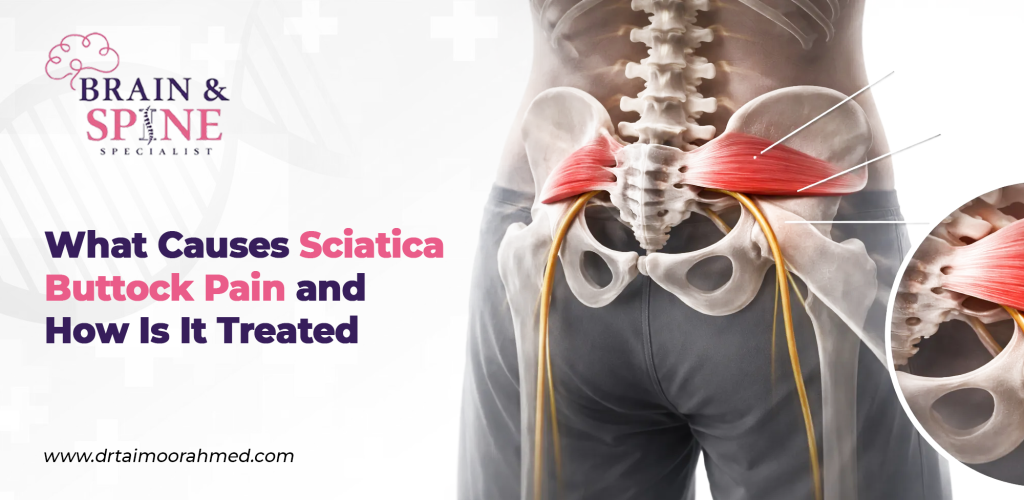
The term sciatica refers to the feeling of pain in the buttocks that can radiate down into the legs. There are many kinds of diseases associated with sciatica because they involve a feeling of pain in the sciatic nerve or root. This nerve is very long, and there can be many spots of irritation on it; any kind of pain felt in these spots is known as sciatica.
The management of such pain requires proper sciatica treatment by a specialist. For those struggling with debilitating nerve discomfort, consulting an expert like Dr. Taimoor Ahmed a trusted brain and spine specialist in Sialkot—ensures an accurate diagnosis and access to modern care tailored to your spine health.
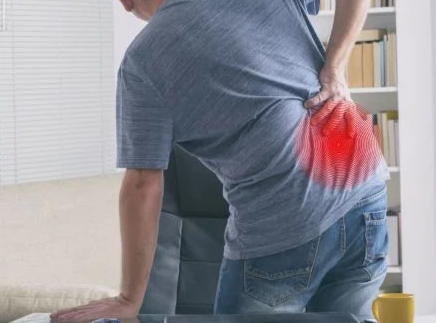
Sciatica pain usually occurs on just one side of the body. Pain associated with sciatica usually starts in the lower back or in the buttocks and runs through the legs and may even reach the feet or toes. Patients usually describe it as either a dull pain or as a burning, shooting type of pain.
Herniation, also known as a prolapsed or slipped disc, is thought to be the most frequent cause of sciatica. Discs are tough, elastic tissues that cushion the spine. When the inner material of a disc pushes outward, the disc may herniate or protrude, pressing on a nearby nerve root and causing sciatica.
One of the causes of sciatica is spinal stenosis, where the narrowing of the spinal canal causes sciatica pain that worsens with prolonged standing and walking. Further nerve root compression also occurs due to narrowing of the spinal canal.
Sciatica may also occur as a consequence of spondylolisthesis when one vertebra slips over another. This displacement often narrows the spinal canal and compresses nerve roots, causing lower back pain and pain radiating down the legs.
Sciatica can also arise from injuries or overuse of muscles in the lower back or legs. Twisting or overextending the spine, legs, or lower back can also cause sciatica. Gradual weakening of the lower back muscles and ligaments from overuse can also cause sciatica.
The center of gravity of the mother tends to shift forward and downwards as the fetus develops within the body during pregnancy. The additional weight carried by the pregnant woman causes the back to be strained, thus resulting in sciatic nerve pain.
The ability of the spine to cushion the body against stress and impact decreases with age, and the water content in the intervertebral disc decreases, whereas the flexibility of the facet joints decreases. If the sciatic nerve and its roots become compressed as a result of this process, sciatica can occur.
The low back and leg pain can be due to irritated, overstretched, or overused muscles. Tightness of the muscles in the hip or glute area can cause sciatica as well.
There is another muscle called the piriformis muscle that passes through the buttocks and acts as an external rotator of the hip. Sciatica may also develop when this muscle gets inflamed and irritated and compresses the sciatic nerve.
Due to the nerve involved and the level of irritation, there are various sciatic symptoms that are experienced. The table below provides common symptoms of sciatica:
| How It Can Affect the Nerve | Common Symptoms |
|---|---|
| A herniated disc can pressure a nerve root | Buttock and leg pain, numbness, or tingling |
| Narrowed spaces in the spinal column put pressure on nerves | Leg pain, numbness, or weakness |
| A displaced vertebra can put pressure on nerves | Discomfort in the back, buttock, and leg |
| Tense muscles can put pressure on the sciatic nerve | Pain in the buttock with possible leg symptoms |
| Physical strain can irritate tissues | Discomfort in the back and buttock |
| Changes in weight and posture can affect the sciatic nerve | Pain or discomfort in the lower back, buttock, or leg |
| Spinal changes reduce space for nerves. | Discomfort in the back and nerves |
Tired of persistent sciatica buttock pain? Consult Dr. Taimoor Ahmed, a dedicated brain and spine specialist in Sialkot offering modern, effective treatment options.
Some activities have the potential to cause sciatica to develop. Sitting for long periods of time and bending in some postures may cause sciatica symptoms to worsen. It is best that a person avoid staying inactive for prolonged periods. The patient should consult a spine specialist on how much rest and exercise are needed.
The right treatment will depend on the underlying cause and the duration of symptoms. Sciatica treatment usually involves non-surgical approaches, as most cases of sciatica respond well to conservative care.
Being physically active is one of the core aspects of sciatica treatment. It ensures flexibility and strength of muscles and decreases the chances of developing circulation problems. Physical activity contributes to the restoration of proper movement and functioning of the spine and muscles around it.
Inactivity caused by avoiding pain-inducing motions may worsen the condition. So, walking and exercises are commonly prescribed as the foundation of treatment.
Heat or ice therapy is usually effective in relieving the symptoms of sciatica. They can be useful in reducing swelling and pain as well as other symptoms of sciatica.
But the application of heat or ice directly to the skin may result in an injury. Thus, it is necessary to place a towel or some other soft material between the skin and the heat or ice pack.
Physical therapy is another conservative approach. Patients can get a personal plan from a specialist that includes therapeutic exercises and techniques of physical reconditioning.
Doctors may recommend pain-relieving medications to help manage sciatica symptoms and improve comfort. If the pain persists or does not respond to initial treatment, further tests may be advised to identify the underlying cause. In more severe cases of sciatica, additional treatments may be necessary, which can include prescription medication or, when appropriate, surgery.
While sciatica usually causes pain that is both irritating and temporary, it is very important to report to a spine specialist whenever there are recurring symptoms. Progressing numbness or weakness in the legs and back, back pain, or numbness in the groin and genitals should not be ignored. This may point to an issue with the pressure exerted on the spinal cord and/or nerves, which need immediate attention.
Several conditions can lead to sciatica, which include disc prolapse, spinal narrowing, muscle contraction, accidental trauma, pregnancy-related pain, and age-related spinal changes.
However, the cause of sciatica may be difficult to identify; it is crucial to identify clinical signs in order to start the proper treatment. Sciatica patients who experience acute symptoms or recurrent sciatica need to see a specialist immediately.
If you are experiencing recurring nerve discomfort, consult Dr. Taimoor Ahmed brain and spine specialist in Sialkot, who specializes in treating all forms of back pain and sciatica by identifying the true root cause to deliver long-term relief for his patients.