
| Only Brain & Spine Specialist in Sialkot giving 24/7 HOME-VISIT-SERVICE for patient follow-up and nursing care |
We all know that headaches turn off our day and make us less productive. The tasks can be delayed, meetings get cancelled, or important activities of the day can be disturbed easily. But there are people who suffer from constant headaches throughout the day and night. Not just for one day or one week, but constantly.
Such people lose productivity and start remaining isolated. This constant headache feels like pressure and causes dizziness, blurred vision, and so much more.
These are the people with hydrocephalus. Such patients have water or fluid in their brain, which is the main cause of all those symptoms and discomfort. However, there are many treatment options available to treat hydrocephalus.

In Pakistan, Dr. Taimoor Ahmed offers successful and top-quality hydrocephalus treatment, helping the patients to get back to their daily life routine as soon as possible. This article explains an amazing and advanced treatment option used for hydrocephalus treatment that has provided relief to many patients in Pakistan and around the world.
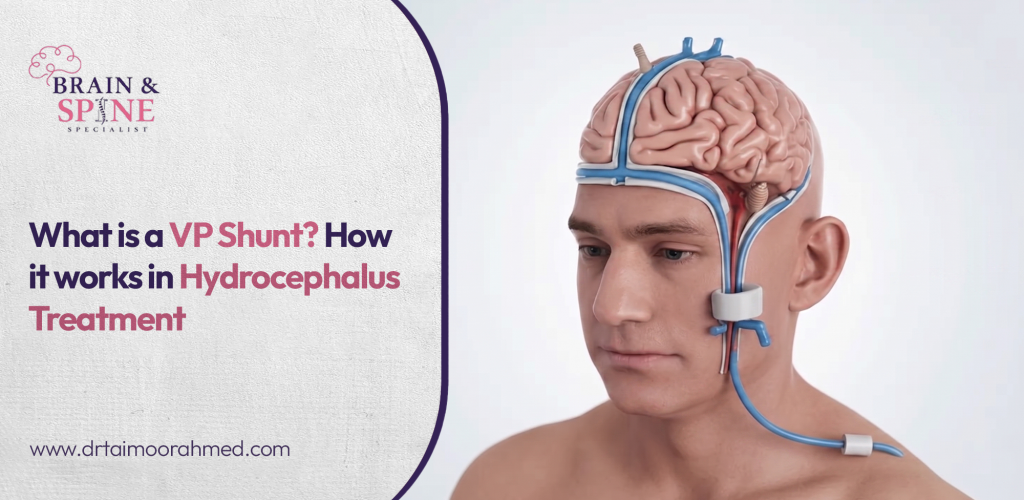
Ventriculoperitoneal Shunt, also known as VP shunt, is a medical device that is small in size and flexible in nature. It is specifically designed in such a way that it can easily remove excess cerebrospinal fluid from the brain. The removed fluid is redirected to any other part of the body where it can be absorbed safely. So in short, it acts like a drainage system for the brain.
This device is surgically implanted in the brain by specialists. Silicone flexible tubing is used to design this shunt for its smooth working. It should be noted that this device is not a cure for hydrocephalus. It does not allow the brain fluid to accumulate in the brain.
Thus, it provides a long-term management solution that effectively prevents the symptoms caused by hydrocephalus. The shunt usually moves fluid from the ventricles in the brain to the abdominal cavity, also called the peritoneal cavity. Once the fluid reaches the abdomen, the body absorbs it naturally.
It is one of the most common and effective options used in hydrocephalus treatment in Sialkot. It has helped millions of patients worldwide live healthier, fuller lives by reducing dangerous pressure on the brain.
Get A Successful VP Shunt From Dr. Taimoor To Treat Your hydrocephalus.
Restore Brain Pressure Balance & Improve Your Life
A VP shunt is deceptively simple but incredibly sophisticated. It is comprised of three distinct parts that work together seamlessly to maintain safe intracranial pressure:
The table below summarizes the function of each component simply:
| VP Shunt Component | Function |
|---|---|
| Catheter | A thin tube is placed inside the brain ventricles to collect excess fluid |
| Valve | Controls the flow and pressure of cerebrospinal fluid |
| Distal Tube | Carries fluid from the brain to the abdomen |
The mechanics of the shunt are elegantly simple. In the condition of hydrocephalus, a patient has extra fluid (cerebrospinal fluid) in their brain. This fluid keeps building up there, causing increasing discomfort as time goes by. When the pressure inside the skull builds up to an unhealthy level, the one-way valve of shunt opens.
It will enable the extra CSF to move out from the brain ventricles, via the ventricular catheter, through the valve, and along the long peritoneal catheter. When the CSF gets to the peritoneal cavity, which surrounds the organs in the abdomen, it will be absorbed into the body. The shunt will remain in place doing its job of adjusting pressure on its own.
There are two main types of valves used in this hydrocephalus treatment:
Brain surgery is certainly a scary prospect. However, VP shunting is a common procedure. It is performed thousands of times each year. Here is how the procedure is performed:
Proper neuroimaging tests will be performed so that the surgeon can know the exact location of CSF accumulation and where to place the shunt correctly. This includes scans using techniques like MRI or CT scans.
They show the specific dimensions of the ventricles in the brain. This process is not painful because it is performed under general anesthesia.
The neurosurgeon in Sialkot will make a minor incision in the scalp of the patient. After that, several incisions will be made in the neck and abdomen.
With the help of a special tunneling instrument, the surgeon will pass the narrow peritoneal catheter underneath the skin layer to connect all parts of the system. The entire operation takes from one to two hours.
The patient will wake up in the recovery room. There, they spend some days in the hospital to allow doctors to assess their neurological condition.
After making sure that the patient is stable and the shunt is draining the fluid properly, the patient can go home. Pain medications are prescribed to manage temporary discomfort.
Without treatment, hydrocephalus may continue to harm the brain. The pressure in the skull may affect one’s ability to move around, memory, learning, and daily activities. The VP shunt alleviates the pressure and saves brain functionality. The advantages of having a VP shunt include:
In infants and children, the timely treatment of hydrocephalus will help the child have healthy brain development at their growing age. In adults, treatment will enable them to become independent and be able to go back to work and other social activities.
The sudden diagnosis of hydrocephalus can change a person’s life overnight. Fear of increased pressure in the brain, concerns about surgery, and uncertainty about the future can leave patients emotionally overwhelmed. However, understanding the role of a VP shunt can replace fear with hope.
A VP shunt is considered one of the most reliable solutions in hydrocephalus treatment because it helps restore the normal flow of cerebrospinal fluid and protects the brain from dangerous pressure buildup. In many cases, patients receiving brain tumor treatment in Sialkot may also require VP shunt placement when tumours block fluid circulation inside the brain.
Although the treatment journey can be challenging, thousands of people continue to live healthy and fulfilling lives with VP shunts. For patients, a shunt is more than a medical device it represents relief, brain protection, and a path back to normal life. Early consultation with a neurologist or neurosurgeon is essential to prevent serious complications and ensure timely treatment.
Dr. Taimoor Ahmed, a neuro and spine specialist in Sialkot, provides expert care for hydrocephalus and related neurological conditions through advanced VP shunt procedures. With extensive experience in neurosurgery, he has successfully treated hundreds of patients requiring hydrocephalus management. Through proper medical care, regular monitoring, and emotional support, patients can move forward with confidence, hope, and improved quality of life.