
| Only Brain & Spine Specialist in Sialkot giving 24/7 HOME-VISIT-SERVICE for patient follow-up and nursing care |
A strange stare. A sudden loss of awareness. A brief twitch that seems harmless. They might be easily overlooked, particularly if they only last a couple of seconds. It might be more comfortable for many people to ignore any slight and unusual body or mental changes. However, in certain cases, the body may give a warning related to neurological disorders that must be taken seriously.
Dr. Taimoor Ahmed is an experienced neurologist in Sialkot who helps patients recognize and manage epilepsy. He uses advanced diagnostic tools to identify seizure-related conditions and provides personalized epilepsy treatment in Sialkot. Epilepsy is a condition that can strike anyone at any point in his or her life. Its initial symptoms may not be dramatic at all.
If the symptoms of seizures are overlooked or epilepsy treatment is not done, one risks sustaining an injury, emotional stress, difficulties at school or workplace, and overall decreased quality of life. Fortunately, being able to recognize the signs of a seizure in time can result in proper treatment.
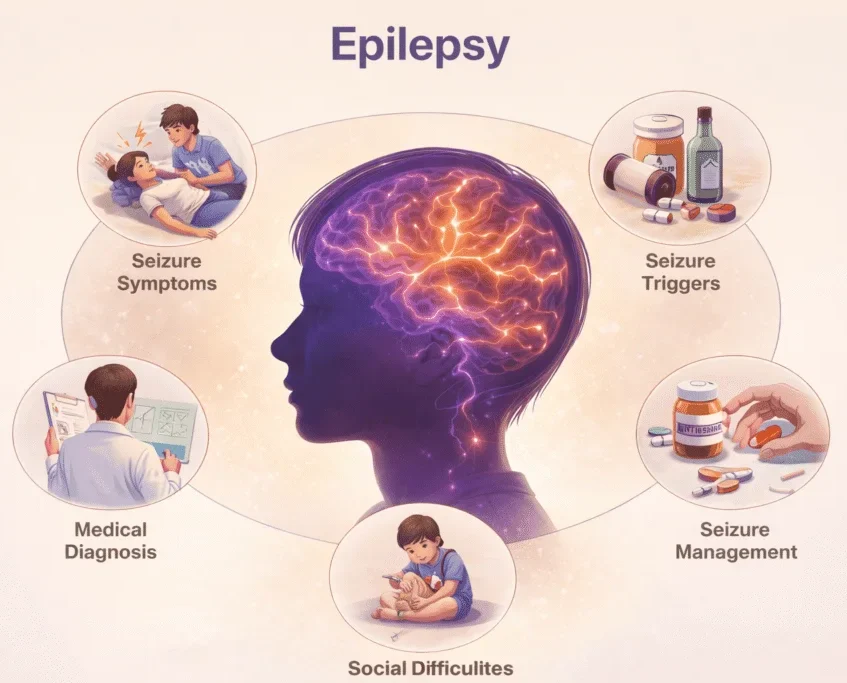
Epilepsy is a neurological condition that involves having repeated episodes of seizures. It results in a temporary interference with brain functions. Based on the part of the brain in which the disturbance occurs, the results can vary from a momentary blank stare to physical convulsions or unconsciousness.
The various forms of Epilepsy lead to varied patterns of seizures. Some people have seizures several times in a day while others go through long periods without an attack. There has to be an assessment of the individual’s symptoms, past medical records, and other test results by a neurologist for effective epilepsy treatment.
In most cases, when one thinks about a seizure, they tend to have a perception of something terrible and scary happening, such as falling to the ground and having convulsions.
While this may occur, there are many more subtle signs that can go unnoticed. It is, therefore, essential to recognize such signs so as to help identify seizures at their early stages.
The symptoms of epilepsy, which normally appear to be those of daydreaming and being distracted, are marked by sudden cessation of activities. The patient ceases whatever they were doing, staring blankly into space for 5-20 seconds without any awareness of his/her surroundings and then coming back to consciousness suddenly.
These are brief shock-like jerks in arms, legs, and other parts of the body due to an electrical impulse. Though it is normal for most individuals to experience an involuntary muscle jerk during sleep (known as hypnic jerks), frequent muscle jolts, such as unintentionally letting go of a coffee cup, need medical attention.
While it is not uncommon to occasionally feel like something has been experienced before. But having an overwhelming sense of this feeling, or the opposite, where a familiar place becomes completely alien to the sufferer, may be an abnormal electrical surge in the temporal lobe of the brain. It is often accompanied by a burst of fear or panic.
In some kinds of focal epilepsy, the individual may be standing but is unable to control their actions consciously. The actions include repetitive and senseless actions like lip smacking, chewing constantly, rubbing one’s hands, adjusting clothes, and pacing around. The individual does not remember carrying out these actions.
In many people, an “aura” is actually one of the symptoms of epilepsy, a local, simple focal seizure that is used as a warning. An aura takes on different forms:
Because symptoms present differently based on the individual and the area of the brain affected, comparing these subtle signs side-by-side helps clarify epilepsy treatment options:
| Symptom Category | What It Looks or Feels Like | Common Misdiagnosed Neurological Disorders | When to Take Action |
|---|---|---|---|
| Absence Lapses | Brief staring, frozen posture. Flickering eyelids. No response to voice. | Daydreaming, ADHD, fatigue, inattentiveness. | Episodes happen multiple times a day or interrupt learning/work. |
| Focal Motor Symptoms | Uncontrollable twitching of one arm, leg, or face muscle. Sudden head nodding. | Nervous tics, muscle spasms, restless leg syndrome. | Twitches happen repeatedly or cause dropping of held objects. |
| Sensory Auras | Sudden metallic taste. Phantom smells. Rising stomach feeling. Visual spots. | Acid reflux, migraine, sinus issues, panic attacks. | Sensory changes occur suddenly alongside brief confusion or fear. |
| Cognitive Shifts | Sudden, intense, profound memory gaps. Momentary loss of speech. | Stress, severe fatigue, anxiety attacks. | Sensations occur repeatedly without an obvious environmental trigger. |
Concerned About Epilepsy Symptoms? Visit Dr. Taimoor Ahmed for Accurate Diagnosis and Expert Neurological Care in Sialkot.
When it comes to managing seizures that are unknown, it is similar to moving around in the dark in a minefield. Having no idea when the loss of consciousness or control may take place has an enormous emotional effect on the patient and even on their families. Early diagnosis and treatment of potential neurological diseases cannot simply be associated with naming the illness.
See a specialist for neurological disorders. Some methods, like EEG testing the brain waves and MRI, can help diagnose the electrical problems without causing any pain. Moreover, a specialist will help with epilepsy treatment as well.
Record the date and time when this took place. How long it lasted. What the individual was doing just before this, and how they were feeling straight after.
It would be wise to take short video clips on the cell phone that could later help a neurologist diagnose the symptoms.
Before going for the diagnosis, do not swim alone, have a bath, or do any activity that may cause the patient to fall down.
Sometimes, epilepsy is not revealed by the occurrence of a seizure. It may begin with just a few seconds of staring, twitching, experiencing a weird feeling, or having some confusion. This does not look like a big deal. It can be very dangerous.
Being able to notice a probable sign of Epilepsy will ensure that one gets a correct diagnosis and does not suffer from any further complications. Some neurological symptoms can have different causes, which is why recognizing the symptoms of brain tumor and other conditions is important when seeking an accurate diagnosis.
Any individual experiencing such symptoms regularly should seek consultation from a Neurologist named Dr. Taimoor Ahmed instead of self-diagnosing. He provides specialist neurological services in Sialkot and employs the latest technologies in order to make a diagnosis, along with providing the appropriate epilepsy treatment to his patients. With correct diagnosis and appropriate treatment of Epilepsy, many epileptics can control their seizures successfully.